

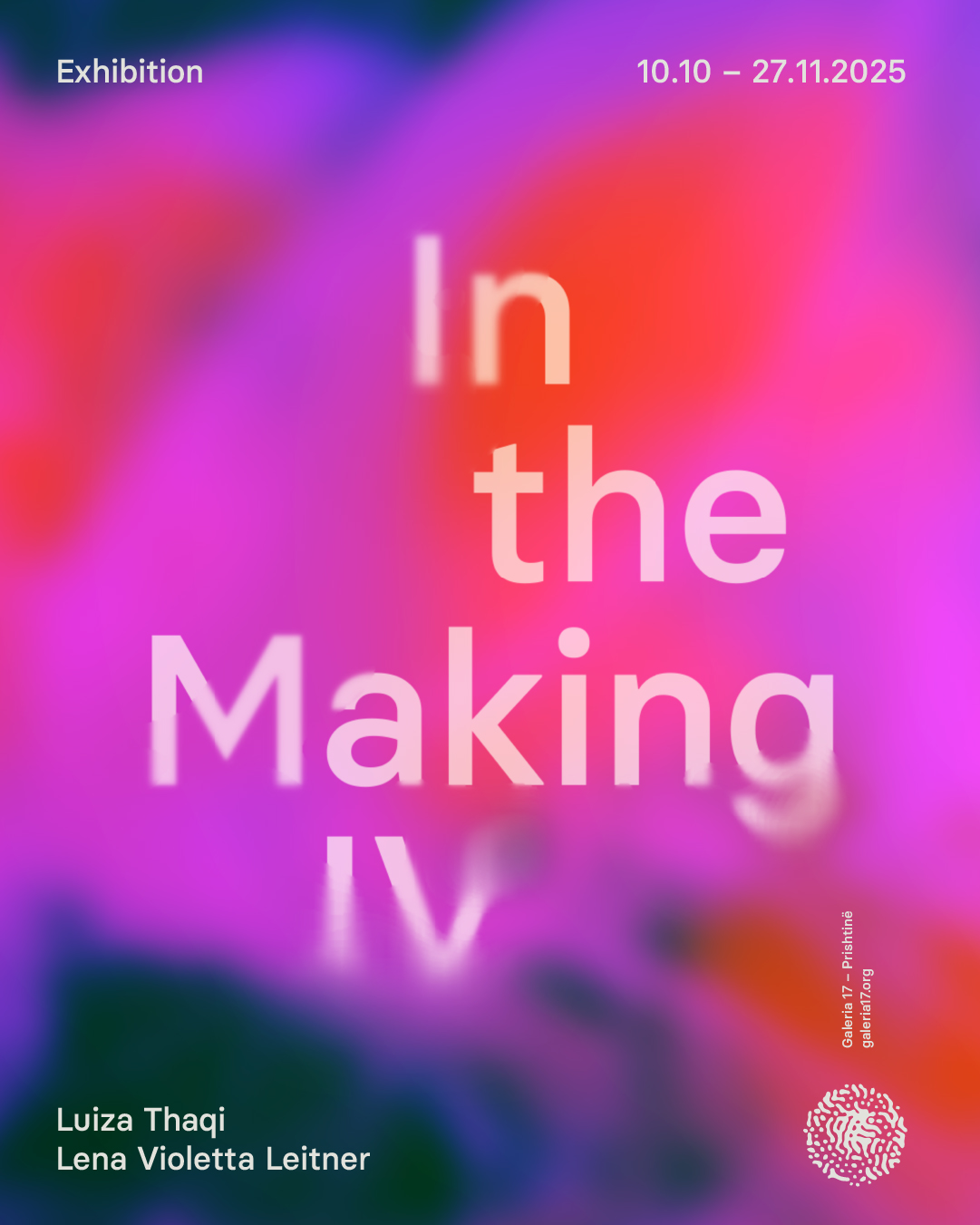
10/10/2025 – 27/11/2025
Luiza Thaqi
Lena Violetta Leitner
In a dynamic network, where natural and social elements intertwine through co-creation, mediation, and collective survival, a hybrid and inevitable reality emerges for safeguarding ecological and social equilibrium. Within this configuration, conceptions of agency grounded exclusively in the human are surpassed, opening new pathways for posthuman perspectives and multi-agent interactions. L.T and L.V. reveal this continuously shifting dynamic—between species, among different entities, and across time.
“Garden of Hybrids: Cultivating Realities” by Luiza Thaqi highlights Bruno Latour’s reflections in We Have Never Been Modern (1991), which argues that nature and society are inseparable networks that, as a result, produce a complex and layered system of meaning. In this context, the hybrid soil of her installation traverses composition, movement, reconstruction, and interaction—both materially and conceptually. We are thus immersed in the garden of hybrids; an earth that is never fixed: fragments of soil that carry memory, seeds that migrate, architectures that adapt and ceaselessly reshape themselves through repair and recreation. It is a recognition of how every gesture, structure, or decision resonates across the networks of human and non-human relations within a functioning system.
In Lena Violetta Leitner’s work “Hello Prishtina, here is your Forecast of Forgotten Rivers and Unruly Dragons…” we are reminded that our relationship with the capital’s rivers, Vellusha and Prishtevka, was not severed with their burial. On the contrary, she re-links this communication through a speculative, urgent, and collective weather forecast that recalls floods, droughts, and destructive storms. In this way, the mythical curse of the kulshedra is revived, and the voice of the Vellusha resounds from beneath the ground as a living memory, irreconcilable with silence. By digging the intersections between narrative and memory, the individual and the collective, lived experience and discovery, we uncover fertile fissures where hybrid meanings flourish once again.
Thus, within the gallery, non-human actors—organic and inorganic matter, soil and time—interact with human practices, politics, and activity, revealing how power, knowledge, and belonging circulate through hybrid pathways. The exhibition traces the movement of materials from one place to another; it reflects ecological data translated into community memory; it offers a weather forecast that surpasses agencies confined solely to the human.
***
Under the theme of Queer Ecology, we seek to offer an inclusive language—a language that honours and recognizes the personality of the natural world, liberating it from the conventional objectification of living matter. This approach highlights interactions with non-organic actors while also unfolding flexible identities that reconfigure notions of territory and time. In doing so, it releases ecological perception from rigid boundaries and situates it within a state of continuous renegotiation and co-creation.
Fitore Isufi Shukriu
—
This exhibition is supported by the Kosovar Civil Society Foundation (KCSF) program ‘EJA Kosovo’, co-financed by the Swiss Agency for Development and Cooperation (SDC) and Sweden. Ministry of Culture, Youth and Sport, SMART Balkans, Austrian Embassy Pristina.